
Forest Lake Resident Lookup Records
No Forest Lake office publishes one official directory of everyone who lives in the city. The useful path is narrower: match a name to a record's stated role and date. Washington County parcel tools describe ownership, mail, situs, value, and classification. Minnesota court records describe public proceedings. State and county vital routes document qualifying events, while historical repositories preserve older snapshots. A person who appears in one source can be an owner, a party, a license holder, or a historical subject rather than a current occupant.
| Record | What it can confirm | Custodian or portal | Access boundary |
|---|---|---|---|
| Parcel and tax record | Owner role, PIN, assessed parcel data, and address type | Washington County CTAS | Owner and situs are not proof of present occupancy. |
| Recorded instrument | Grantor, grantee, recording date, legal description, and document type | RecordEASE | Index access begins online in 1984; account and use fees apply. |
| Registration confirmation | A requester's own current registration status | MNVotes | It requires name, birthday, and address and is not a public person finder. |
| Public court case | Case context, parties, filings, hearings, and public documents | Minnesota Court Records Online | Online coverage is limited by case class and filing date. |
| Historical collection | Past family, cemetery, census, school, or local-history connection | Washington County Historical Society | Historical presence is not current residence. |
Start with the least invasive official source that answers the real question. A parcel question belongs with county land tools. A family-history question belongs with the historical collections. If a document must be official, request it from the custodian instead of relying on a screen result.
Forest Lake Court Name Checks
Forest Lake matters use Minnesota's District Court system, with Washington County court administration as the local courthouse route. Minnesota Court Records Online, known as MCRO, separates Case Search, Document Search, Hearing Search, and Judgment Search. Case Search accepts person, business, attorney, case, citation, and attorney-bar searches. Document Search requires a case number. A name result is only a lead, so compare the court, filing date, party role, case type, and case number before drawing a conclusion.
The public web view does not expose every record. Documents filed on or after July 1, 2015 have defined online categories, while some family, harassment, domestic-abuse, commitment, juvenile, and other sensitive materials are unavailable or restricted. Pending criminal matters also cannot be searched by defendant name alone. Courthouse public terminals provide broader electronic access, and court administration is the next route for older paper files, certified copies, or records that are not online.
The Washington County Library hosts the official daily jail-booking report landing page, shown here as a record-scope example.
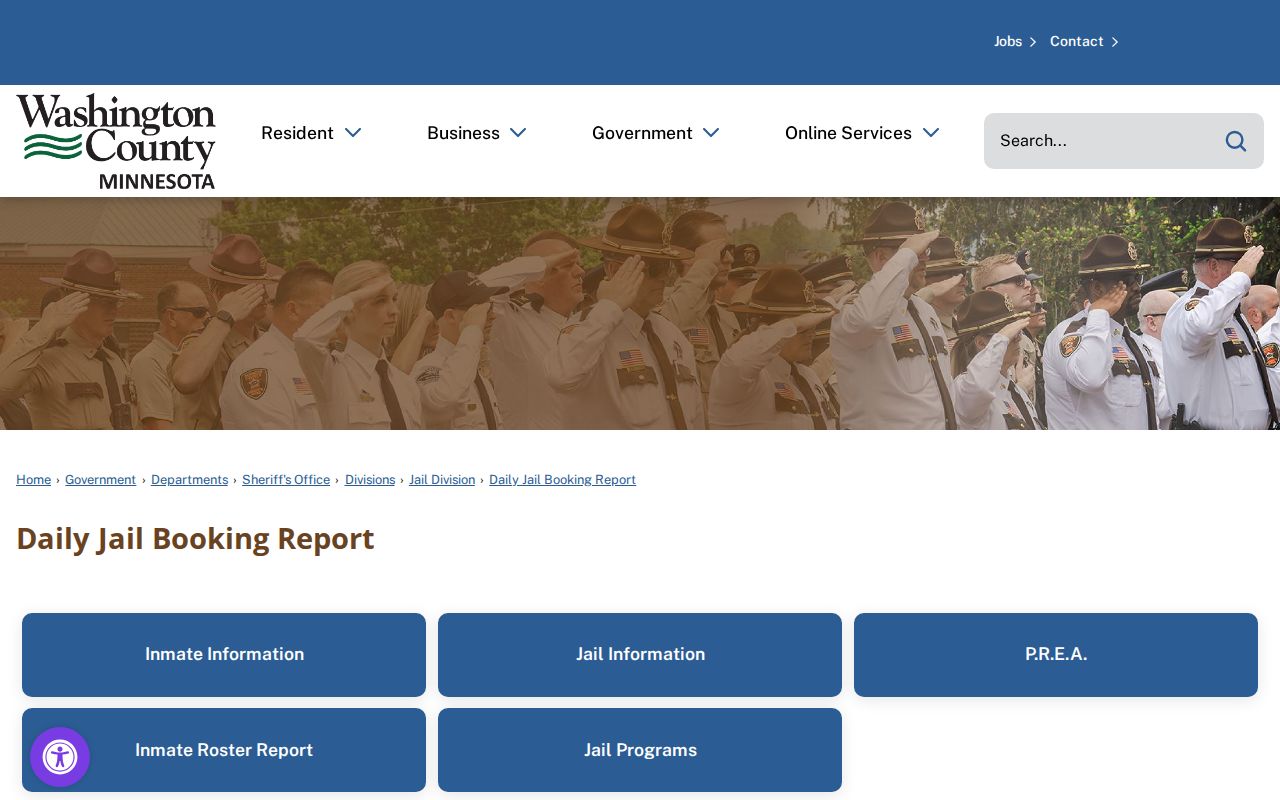
The page links date-specific adult booking snapshots, not a complete arrest history or a current-resident list. A booking is not a conviction, and an absent or present name does not settle identity without record context.
Note: Keep the case number, source date, and access limit with any court research note so a same-name result is not mistaken for the wrong person.
Forest Lake Voter Context
MNVotes is designed for a voter checking that person's own registration. Its form asks for first name, last name, birthday, and address. In ZIP mode, it then uses ZIP code, county, city or township, house number, street, and an optional unit indicator. The state says its data are updated nightly, although officials can take up to 14 days to process a registration application. A confirmation is useful for the lawful voter task it serves, but it should not be treated as a general person search.
Minnesota's separate registered-voter-list request is much narrower. Under Minnesota Statutes section 201.091, only registered Minnesota voters may request the list, and permitted uses are limited to elections, political activities, or law enforcement. The request form offers geographic and street-sorted formats, but it also restricts sale, internet publication, and providing the data outside the statutory purpose. Full birth dates and several identifying numbers are protected.
Registration at an address for an election is not proof that someone lives there now. Address changes, processing time, and protected-voter rules all matter. Washington County Elections can explain current election administration, while the state portal remains the proper route for an individual's registration confirmation.
Forest Lake Vital Record Routes
For a birth, death, or marriage question, use the record type and access rule before searching a name. The Minnesota Department of Health Office of Vital Records reports statewide birth coverage from 1900 and death coverage from 1908. Washington County can issue certificates through the statewide system, including at the Headwaters Service Center in Forest Lake. County service is generally the practical local route, while mail and fax requests use the state forms and procedures.
A noncertified public birth record or death record is different from a certified copy. Certified copies require a qualifying relationship, right, or other listed eligibility plus the required identification and attestation. Washington County does not participate in the statewide MOMS marriage index, so a Forest Lake marriage-copy request belongs with Washington County marriage services. The research records a $10 county certified-copy fee, while current methods and hours should be checked with the county before visiting.
A person asking for a certified birth or death copy should start with the official MDH eligibility guidance. That guidance distinguishes a public index from a record that can be issued with certification. It also helps prevent a name-and-date match from being presented as proof of parentage, identity, or a current Forest Lake address.
Forest Lake Professional Record Roles
A business filing or professional credential can confirm a public role, not a private home. The Minnesota Secretary of State business search accepts a business name or file number, supports begins-with or contains matching, and can include prior names or select active and inactive filings. Its result may show an officer, organizer, registered agent, filing history, or address as filed. Those entries can be stale and may be commercial contacts.
For a credential, the state directs users to board-specific searches through Minnesota eLicense. The Department of Labor and Industry's portal lets a visitor continue as a guest and search license or registration holders; its data are updated nightly. The Medical Board and other issuing boards have different fields and update schedules. Match a license number and issuing agency, then record the status date rather than treating a city field as a residence statement.
The state license and registration lookup illustrates the board-specific public-record route.
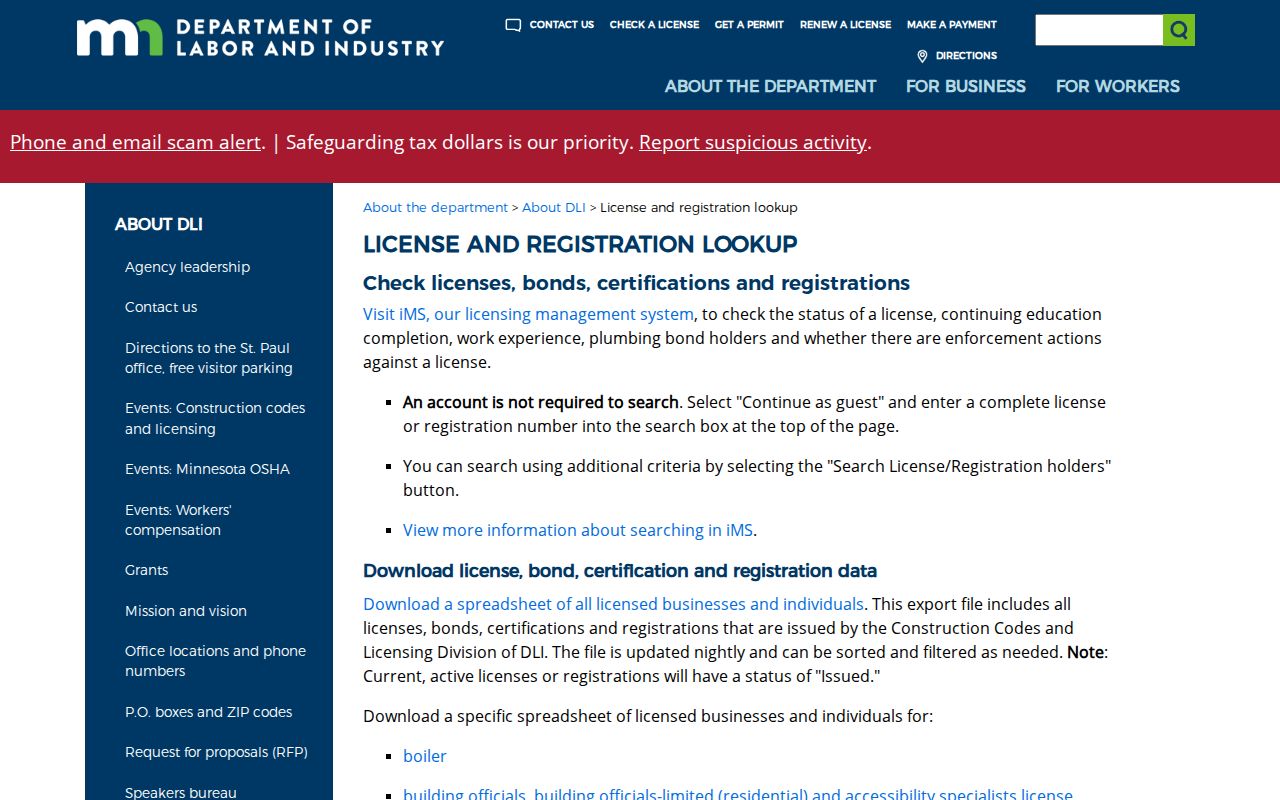
Use a professional record to verify public credential status or identify the responsible agency. It does not establish where a person lives or supply a complete personal history.
The Minnesota Secretary of State business search is another role-specific source.
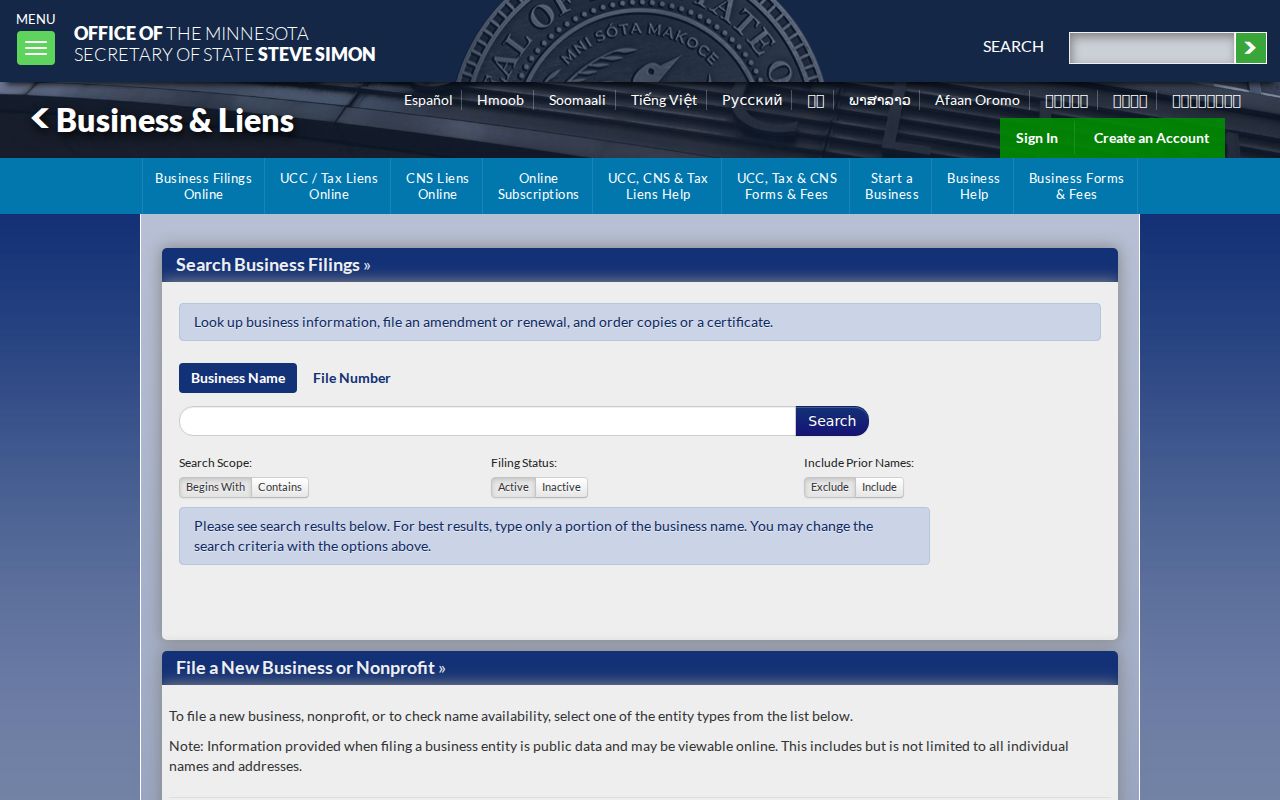
Its filters are useful when an entity name or filing number is known, but a registered agent or officer should remain labeled as a business-record role.
Verifying a Forest Lake Resident
Verification works best as a short chain of independently dated records. Begin with a name plus a known, lawful context such as a parcel, a probate matter, a historical family, a filed business, or the person's own voter registration. Then compare what each official source actually says. A deed proves a recorded transaction, for example, not that a buyer moved into the parcel. A court docket proves a proceeding, not that a same-named party is the person being researched.
- Write down the exact name, name variants, source date, city or township, and record role already known.
- For a parcel connection, use the county GIS or CTAS record to capture the PIN and legal description before relying on address spelling.
- Search RecordEASE or MCRO with the additional context, then compare the document date, party role, and case or recording number.
- Use an MDH, county, MNHS, or archival route only for the event or historical question involved. Request a certified copy from the proper custodian when it is genuinely needed.
- Docket
- A court's running list of case events, such as filings, hearings, and orders. It is not a biography of the parties.
- Index and image
- An index points to a record through names, dates, or numbers. An image is a view of the document itself and can have different access rules or fees.
- Certified copy
- A copy issued by the custodian with official certification. Minnesota limits who may obtain certain certified vital records.
A historical household may need a different chain. The Forest Lake city directories and historical collections route can supply a dated earlier lead, which should then be checked against the relevant archival source rather than projected into the present.
Forest Lake Resident Address Myth
A common mistake is to treat every address on a tax or parcel record as a residence. Washington County's tax-data request form makes a sharper distinction: primary situs is an informational and search field, may not be a valid mailing address, and may be absent for a PIN. The mailing address can belong to an owner, entity, agent, or other contact. The parcel's situs identifies where the parcel lies. Neither label by itself confirms who occupies it today.
This is a practical Forest Lake record-checking tip. Start with the county's Tax Search using the house number and street name without a suffix, select the PIN, and label every returned address by its field name. If a question requires a document trail, move from the PIN or legal description to the Recorder. If the issue is present occupancy, do not fill the gap by combining records that were not created for that purpose.
Note: A careful label such as “mailing address as filed” preserves the meaning of the record and avoids claiming a current residence that the source does not establish.
Forest Lake Resident Record Limits
Minnesota Government Data Practices Act requests can help when a public record is not on a portal. The state's request guidance says a requester generally may ask for public government data without giving a reason or identity. Name the existing record, date range, geography, desired format, and whether inspection or copies are wanted. Inspection is generally free, while permitted copying, retrieval, certification, and transmission costs can apply. An agency does not have to create a new list or answer a new research question.
Some information is properly unavailable. Sealed court files, confidential vital material, protected voter data, juvenile information, and Safe at Home real addresses must not be reconstructed from other sources. Safe at Home uses a designated address and unique Lot number while protecting a participant's real address, except through the program's stated legal processes. Missing data can be a privacy boundary, not an invitation to search harder.
Lawful use. Use these Forest Lake record paths for personal, lawful research and never to stalk, harass, intimidate, or target another person. Minnesota law addresses harassment and stalking conduct.